

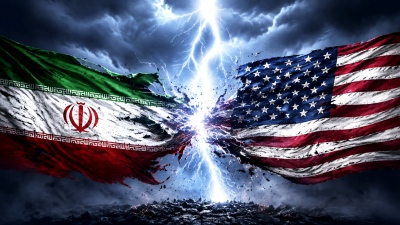
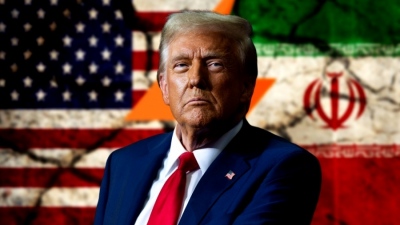
Developments at the diplomatic table between Iran and the United States are cascading, as behind their inflammatory statements, the two parties are working toward an agreement mediated by Pakistan, while they are expected to conduct new negotiations in early June, as Al Arabiya reveals on 5/20. Indeed, the Iranians confirmed, through the Tasnim agency, that they received a new, improved, American proposal which Tehran is examining carefully. In the wake of these developments, the Chief of Army Staff of Pakistan, Asim Munir, may visit Iran on Friday, 5/22, to announce the final version of the agreement. This is because at this moment, intensive work is underway on the final text of the agreement between Washington and Tehran, as Arabic networks broadcast. However, the officials of the Islamic Republic maintain low expectations, at least publicly, signaling that nothing has been finalized yet. In any case, it becomes clear that a potential resumption of American attacks seems uncertain for now, if not impossible, while the hosting of the soccer World Cup by the United States in early June narrows any time margins for full-scale military operations. Not coincidentally, on 5/20, the American President, Donald Trump, stressed that soon we will be finished with Iran, essentially foreshadowing the exit of the United States from the reckless military adventure which they entered in February jointly with Israel.
Iran: We received a new peace proposal from the US via Pakistan
Following the dispatch of the first 14 point text, the Americans sent once again a text in the form of a draft agreement to Iran through a Pakistani mediator. A source close to the negotiation team stated to a reporter of the Tasnim news agency: "After sending the text to Iran three days ago, the Americans sent once again a text toward Tehran through a Pakistani mediator."

He continued by saying: "Iran is examining the text and no response has been given yet. The Pakistani mediator in Tehran is trying to bring the texts closer." Despite this, a well-informed source stressed that nothing has been finalized yet.
Toward a new round of talks in early June between US and Iran - General of Pakistan in Tehran on 5/22
The next round of talks for the resolution of the conflict between the United States and Iran could take place by early June, Al Arabiya broadcast, citing sources. According to the information of the medium, the meeting will take place in Islamabad after the end of the Hajj period. The main rituals of the pilgrimage to the holiest sites of Islam for 2026 fall on May 25-29. Sources also stated that at this moment work is underway on the final text of the agreement between Washington and Tehran.

The Chief of Army Staff of Pakistan, Asim Munir, may visit Iran on Friday, 5/22, to announce the final version of the agreement. The United States and Israel launched a war against Iran on February 28. It is noted that on April 7, the American President, Donald Trump, announced a mutual ceasefire of two weeks' duration with the Islamic Republic. Subsequently, on April 11, Tehran and Washington conducted talks in Islamabad, but the sides failed to reach an agreement for a long-term settlement due to a series of disagreements. While on April 21, the American president announced his intention to extend the ceasefire with Iran. Since then, no new round of talks has taken place. Ultimately, on May 19, Donald Trump stated that the United States is ready to give a chance to diplomacy in the conflict with Iran until the beginning of next week, postponing the resumption of hostilities until then.
Axios revelation: Trump and Netanyahu came to a rift ahead of an agreement with Iran - The phone call that lit fires
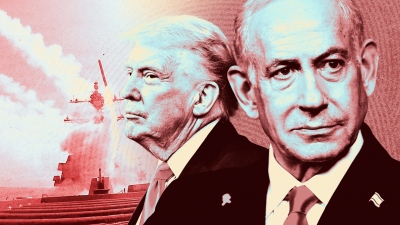
The President of the United States, Donald Trump, and the Israeli Prime Minister, Benjamin Netanyahu, discussed a new effort to reach an agreement with Iran in a difficult telephone communication on Tuesday, 5/20, according to Axios, which reveals that Netanyahu was breathing fire after the call. The significance of the case is that a revised peace proposal was drafted by Qatar and Pakistan, with the contribution of other regional mediators, trying to bridge the gaps between the United States and Iran. The initiative comes while Donald Trump hesitates between ordering a massive attack on Iran and waiting for an agreement. Benjamin Netanyahu remains particularly skeptical of the negotiations and desires to restart the war to further degrade the military capabilities of Iran and weaken the regime by destroying its critical infrastructure. Donald Trump continues to state that he believes an agreement can be reached, but is ready to unleash a second round of hell if this does not happen.
The US - Iran agreement lights fires in Israel - Bibi was breathing fire of indignation
In the background, on the evening of Tuesday, 5/20, Donald Trump had an extended and difficult telephone conversation with Benjamin Netanyahu. Donald Trump informed Netanyahu that the mediators are working on a declaration of intent that both the United States and Iran will sign to formally end the war and begin a 30 day negotiating period on issues such as the nuclear program of Iran and the opening of the Strait of Hormuz, according to a United States source briefed on the call.

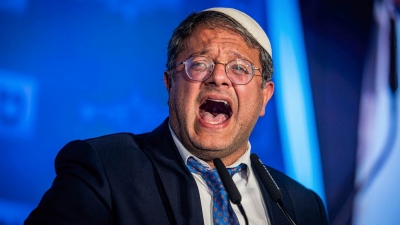
Two Israeli sources reported that the two leaders disagreed on the course of action, while the United States source noted that Bibi was breathing fire after the phone call. The source also reported that the ambassador of Israel in Washington had informed American lawmakers that Netanyahu was anxious about the call, something which a spokesperson for the embassy denied, stating that the ambassador does not comment on private conversations. Two sources stressed that Netanyahu is intensely worried during previous stages of negotiations, even when agreements do not materialize. "Bibi is always worried," one source reported.
Iran: Impossible to end the war without lifting the naval blockade and peace in Lebanon
The spokesperson of the ministry of foreign affairs of Iran stated that for the talks to succeed, the United States will have to end the piracy against Iranian vessels and agree to the release of frozen funds, while Israel will have to end the war in Lebanon. Donald Trump stressed that the war could resume very quickly if we do not get the right answer, but he was willing to give a few more days to the talks. "If I can save people from being killed by waiting a few days, I consider it excellent to do so." The White House and the office of the Israeli Prime Minister refused to comment on the relevant report.
Trump: Following the signing of a peace agreement the American sanctions toward Iran will loosen
Making a clear step of retreat toward the Iranian demands, the American President, Donald Trump, commented on the status of the sanctions of the country against Iran, according to the RIA Novosti agency. In a conversation with journalists, Donald Trump named a condition for the loosening of sanctions against Iran and stressed that the United States will not loosen the status of sanctions against Iran until Tehran signs an agreement with Washington.

"When they sign the agreement, we will be able to rebuild this country and make it a truly good place for people, but no, we did not offer them anything of the sort," he stated. Donald Trump had previously demanded that Iran commit in writing to its resignation from its nuclear weapons program. At the same time, the head of the White House stated that the United States has the opportunity to reach certain agreements with the Islamic Republic within the framework of the negotiating process for ending the conflict in the Middle East.
Donald Trump: The issue of Iran will end soon for the US
Donald Trump may have dispatched a quasi-new ultimatum to Iran on 5/20, in his favorite inflammatory style, yet he dropped a bombshell, underlining that the issue of Iran is ending for the United States. In particular, the president of the United States stated that the Air Force and Navy of Tehran have been destroyed and warned that if an agreement is not signed, American forces will return for the final blow. "Everything is lost. Their Navy is lost. Their Air Force is lost. Almost everything. The only question is, are we going to finish it? Will they sign some document? Let's see what happens," the president of the United States stated in a graduation speech at the US Coast Guard Academy.

The United States is in the final stage of the issue of Iran. We will see what happens. Either we will reach an agreement or we will have to take somewhat drastic measures, but let's hope that this will not happen. Donald Trump made the relevant statements, speaking to journalists before boarding Air Force One to fly to Connecticut, where he will deliver a speech at the Coast Guard Academy.
Esmail Baghaei (Iranian foreign ministry): The enriched uranium will go nowhere
In his turn, the spokesperson of the Iranian foreign ministry, Esmail Baghaei, categorically ruled out the possibility of transferring the enriched uranium of Iran to a third country, denying the scenarios circulating about sending nuclear material to Russia, at a time when negotiations with the Trump administration are in an exceptionally critical phase and the risk of a new flare-up in the Middle East intensifies. In statements on May 20, Baghaei wondered why Iran should transfer its nuclear material outside the country, arguing that the American demands lack a logical basis.

As he stated, if the United States were truly worried about the nature of the Iranian nuclear program, they would not have withdrawn unilaterally from the nuclear agreement, the known JCPOA. The Iranian official argued that the agreement was working flawlessly, pointing out that from 2015 to 2018 the International Atomic Energy Agency had issued 15 consecutive reports confirming the full compliance of Tehran with its commitments and the transparency of its nuclear program. At the same time, he stressed that there is not a single report by the International Atomic Energy Agency accusing Iran of deviving from peaceful purposes, insisting that the nuclear program of the country is 100% peaceful.
Inconceivable humiliation of Netanyahu by Trump: He will do whatever I want
For his part, the president of the United States, Donald Trump, stated that he is in no hurry to reach an agreement with Iran, leaving open the possibility of further diplomatic moves, while at the same time he proceeded to statements that are expected to cause reactions regarding the role of Israel in the crisis. Speaking to journalists, Trump was asked about his recent conversations with the Israeli prime minister, Benjamin Netanyahu, and specifically about the possibility of a military attack against Iran. His answer was characteristic: "He's fine, he'll do whatever I want him to do," he said, referring to Netanyahu.

Continuing, the American president hastened to sugarcoat the pill for the Israeli leader, saying that he is a very good man and adding: "Don't forget that he was prime minister in a period of war." To a question about whether he is open to a limited agreement with Iran, which would include the opening of the Straits of Hormuz and potentially the extension of the ceasefire, Trump appeared indifferent to the pressures for an immediate solution. "The Straits would open immediately, so we will give this a chance. I'm in no hurry. Everyone says 'the midterms, the midterms'. I'm in no hurry," he reported. At the same time, he attempted to present his stance as an effort to avoid bloodshed, stating: "Ideally, I would like to see fewer people killed, instead of more."
Ghalibaf: We are in readiness for harsh retaliation if the US unleashes a second round of chaos - We will crush them
A clear message in every direction was addressed by the president of the Iranian parliament, Mohammad Bagher Ghalibaf, pointing out that the recent actions of the United States show an intention of reigniting hostilities against his country. "All hidden and overt actions at this moment indicate that the enemy is planning a second round of war," he stated, according to what was broadcast by the Fars news agency. "The Iranian people should be certain that our military forces made the best possible use of the period of the ceasefire to reconstitute their capabilities," he added, completing that Tehran will make the enemy regret if it attacks again.

"The enemy still hopes for the capitulation of the Iranian nation and erroneously believes that, by continuing the blockade and repeating the war, it can force Iran to give in to the excessive demands of America," Ghalibaf concluded, repeating that the Iranians will not succumb to pressures.
Postponement upon postponement takes the American strike - The US is unable to press the button
These statements come a few days after the revelation that Trump cancelled a military strike against Iran that had reportedly been scheduled for Tuesday, 5/19, while in the previous period he had given vague time margins for reaching a diplomatic solution, reporting that he could wait two or three days or even for a limited period of time.

The landscape around the relations between Washington and Tehran remains fluid, with the American president attempting to balance between military pressure and the open, but without a specific timetable, diplomatic path.
The visit of the Pakistani interior minister to Iran
At the diplomatic level, an interesting development lies in the fact that the Pakistani Interior Minister, Mohsin Naqvi, departed on Wednesday (5/20/2026) for Tehran, where he is to meet with Iranian officials for talks, according to the semi-official Iranian news agency Tasnim.

The trip of Naqvi to Iran constitutes his second visit within one week, following his previous meeting with the president of the Iranian parliament and chief negotiator, Mohammad Bagher Ghalibaf, and takes place amid reports claiming that Iran and Pakistan have interrupted their intensive cooperation due to a climate of distrust.
The... big bluff of Trump and the big... truth of the Pentagon
The president of the United States attributed the pretext for his withdrawal from a new attack in recent days to the request of the Arab countries of the region, writing relatively: "As serious negotiations are currently underway and in their opinion, as great leaders and valuable allies, an agreement will be reached that will be absolutely acceptable to the United States of America, as well as to all countries of the Middle East and beyond." He himself also stated: "If we can reach an agreement that prevents Iran from acquiring nuclear weapons, we will be satisfied with that." Trump claims for the umpteenth time since the beginning of the war that serious negotiations are underway that may result in an outcome. Of course, Trump made similar claims during the previous negotiations that led to the war as well.

Regarding this, the New York Times reported that the statements of Trump about postponing the war may be a scam. The American newspaper reports that the real reason for the current withdrawal from the attack was the concerns of the Pentagon about the defensive capability of Iran and the interception of American fighter jets. On the other hand, Trump claims that his demand is limited exclusively to the issue of nuclear weapons, yet in the latest exchange of messages it became clear that the United States still persists in its excessive demands on various issues. At the same time, neither Iran has surrendered, nor has it retreated from its legitimate demands or its sovereign rights derived from international law.
The demands of Iran harsher than ever
The main demands of Iran include: the termination of the war on all fronts, the lifting of all sanctions, and the recognition of Iranian sovereignty over the Strait of Hormuz. Correspondingly, the basic demands of the United States include issues such as the removal of enriched uranium, the permanent cessation of enrichment, the non-payment of reparations, and the non-acceptance of the management of Hormuz by Iran. Consequently, the behavior of the United States shows that they are not going to abandon the issue without securing concessions in the missile sector and the weakening of the defensive power of Iran. As a result, there is still a massive distance in the messages and practically no particular progress has been noted. Therefore, it can be said that progress in the negotiations or the approach to an agreement constitutes, so far, simply a claim of the Western side, just like the previous times.
www.bankingnews.gr





Σχόλια αναγνωστών